
Watch, observe, stare... and understand.
Zadie Smith isn't ashamed of being a voyeur. You shouldn't be either.

Photo via Pexels by Jacob Zyc
Last week when I was walking the cat (yes, yes, I know), a couple stopped me to chat. This wasn’t unusual since I’m regularly stopped by curious onlookers who proceed to ask some variation of the same few questions: Does he like it? (No, I’m a monster.) How did you train him? (With a lot of patience.) Why doesn’t he have a tail? (He only wears it on special occasions. Kidding. He’s a Manx.)
The Spanish woman was enthralled by my cat’s round, fluffy face, and she charmingly likened him to the trickster from Alice in Wonderland — a comment I appreciated both for its novelty, and because who doesn’t love the Cheshire Cat, cheekiness and all?
My atrocious Spanish during our exchange gave me away, and the man quickly identified me as a fellow, native English speaker. We then did what people do when they meet someone who’s also adopted a foreign country as their home, and ticked through the standard list of questions, eager to stretch our native tongues in the wild: Where are you from?; How long have you lived here?; Do you like it?; Where else have you lived?
He was British, but we’d both spent a number of years living in New York City. Now, if you’ve spent time abroad then you’ll know that, in these situations, it’s not unusual for people to offer up more of their life story than they usually would in a quick chat in their home country. Humans are pack animals, after all, so the rarity of finding mutual recognition in a foreign land creates a quick bond in the moment. So before I could process that we were no longer exchanging mere pleasantries, he was deep into recounting his personal experience of 9/11.
The man — we’ll call him Ted — explained how he’d worked back then for the company now seared in everyone’s brain since that day — Cantor Fitzgerald — located at the top of the World Trade Center. Twenty minutes passed as I intently listened to him relay his macabre-yet-fascinating experience in great detail.
I’m endlessly curious about the lives of others, and I spend a great deal of time seeking insight like his into what the real, raw lived experience is like for someone who isn’t me. Which is why, days after our interaction, I’m still revisiting aspects of what Ted went through. I don’t revisit his words out of morbid fascination — although there’s probably some of that because it’s human nature — but I revisit them as an opportunity to further process my own understanding of what he experienced, and the consequences to his life’s trajectory. I’ve also found myself extrapolating beyond our conversation, and considering the invisible threads that will have spread outward from him on that day, and created a web of psychological knock-on effects for everyone in his life.
Anyway — his story is not mine to tell beyond that, but the point is that all of the rich, internal exploration that I was able to do came from one, single story. This kind of post-analysis is something I’ve always done reflexively after conversations that impact me, but I couldn’t tell you how or why it started.

The reason I wanted to highlight my interaction with Ted is because it’s an example of a chance encounter that leads to something I consider extremely rare — a conversation with a stranger that goes very deep, very quickly, and is entirely free from the performative constraints that are inherent in small-talk. The rarity of this one-on-one occurrence means that it’s often necessary to improvise ways we can integrate with other lives and cultures; ways that don’t require waiting for a chance encounter, or buying a plane ticket, or speaking an endless number of languages, or being a social butterfly. The last one is particularly relevant for me since I would absolutely consider myself a lifelong introvert. I can confirm that face-to-face interactions are not the only way to gather knowledge about lives that differ from our own lived experience — nor is it particularly realistic to expect that it would be.
In truth, I’m not particularly adept at socializing, which means I’ve spent more time observing, listening, messaging, and reading about the lives of others than I have spent interacting with them in-person. People in my life have had thoughts about this over the years, and I can understand how watching someone live a seemingly internal life is difficult to make sense of if you’re naturally more of an extrovert or ambivert. But the thing is, my life isn’t any less rich or nuanced than that of an extrovert or ambivert; I still interact with the world, just not always in a way that’s obvious to others. My interactions tend to be observational, and rooted in thought experiments (like in the days after meeting Ted), rather than overt displays of connection.
It’s unfathomable to me how, regardless of your natural disposition, everyone isn’t taking advantage of their internal selves to explore the world we’re all part of. There are billions of people in the world, 195-ish countries, and the reality is that we will never cross the paths of even a small fraction of them. So if we’re going to attempt to fill in the blanks of what it’s like to live a life that’s not our own — and yes, we should all be attempting to do this — we have to get creative, and inform ourselves by engaging our imaginations while listening, reading, and observing.
Observing. Ah, now we’ve reached the sticking point!
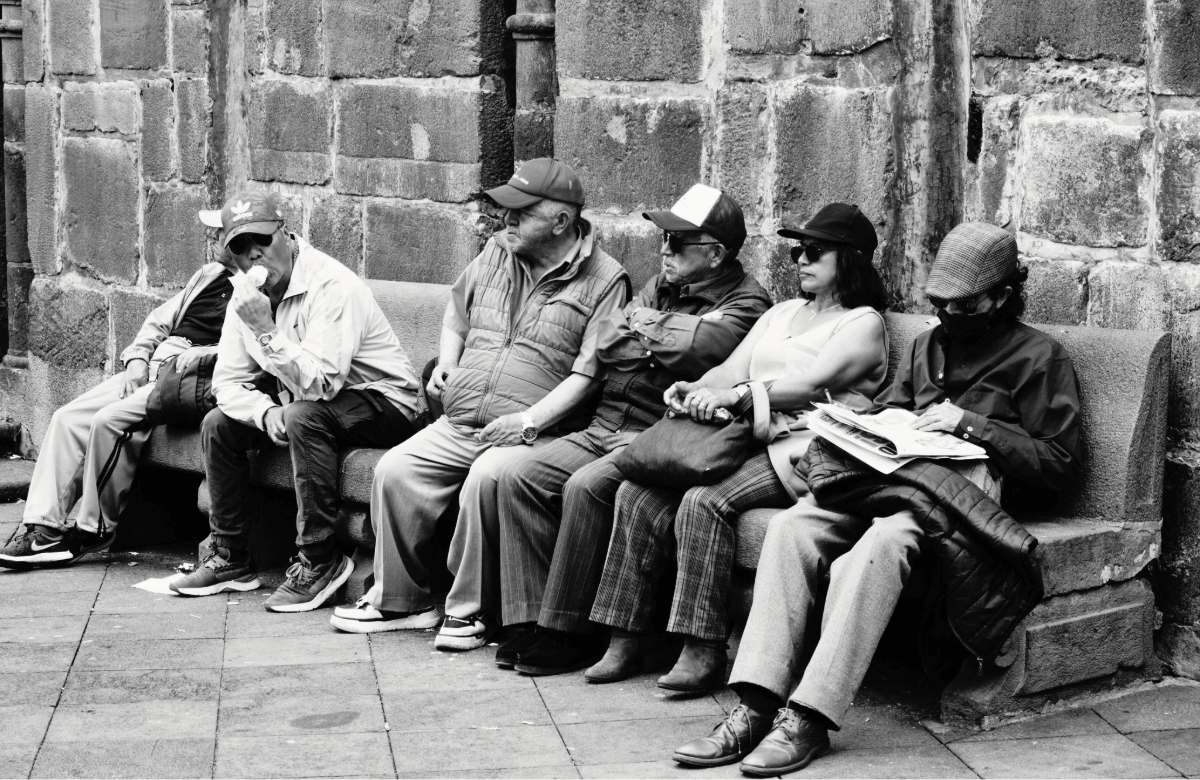
Photo via Pexels by @cristian-reyes
Something we hear said regularly — especially to children — is, stop staring; it’s rude! And yes, stop staring if you’re doing something illegal, or dangerous, or invasive, or offensive, or insensitive, or just plain creepy. But staring, looking, watching — whatever you want to call it — is observing. It’s the basis of scientific exploration. It’s curiosity. And it’s how we can learn about lives that are different from our own. It’s also how we pick up on cues that translate into us being a better friend, neighbor, partner, or citizen. So I’ve never understood why watching the lives of other people gets such a bad rap.
Truly observing someone like a field researcher would — with curiosity, and without judgment — is far more informative than any one-on-one small-talk that requires us to wipe away most traces of individuality. (For the record, I don’t consider this a negative type of interaction per se — it’s just different than the kind of information you can glean from observing, rather than engaging superficially.)
There are times when I second-guess my voyeuristic leanings, however, and wonder if I’m the odd one out who just doesn’t understand societal norms, and has failed to grasp that learning-through-observing is only reserved for the under-fives.
But then, out of the blue, I unexpectedly found a kindred spirit in famed British author, Zadie Smith. While listening to an episode of the Talk Easy podcast, Zadie discussed the power of voyeurism as a form of empathy. The relevant section went like this:
“Sam Fragoso (interviewer): You had a quote in that first one [tv interview] that I wonder if it’s still true for you. You said, empathy and voyeurism are kind of two sides of the same thing. You have to like looking, and then once you’ve finished looking, you have to make an effort to understand. Does that still ring true to you?
Zadie Smith: Yeah, that’s my kink for sure. I like to watch. I like to watch people. I like to watch their lives.
SF: I wasn’t gonna say kink, but no, but it’s fine.
ZS: I don’t mind. That’s the truth. I am really voyeuristic. It’s deep in my nature, and I know it is.”
I may have done a little vindication dance in that moment.
Zadie being her world-famous, writerly self, succinctly put into words something that I’ve done my whole life, and that I knew was beneficial, but that I struggled to fully explain or pinpoint why. What I was missing, and what I hadn’t previously made the connection with, was that all of my internal, post-analysis about people I barely knew, or will never know, is how I strengthen my empathy. And by extension, it’s how I find balance and perspective about my place in the world.
It was eye-opening to say the least.
After hearing Zadie unabashedly embrace her voyeurism, I was eager to hear more from her on the subject. I did a quick search to see if this was something she’d discussed in depth elsewhere, and it turns out that in 2019 she wrote an article in The New York Review about her habits in real life, and how they extend to Fiction. In it she says:
“I was an equal-opportunity voyeur [growing up]. I wanted to know what it was like to be everybody. Above all, I wondered what it would be like to believe the sorts of things I didn’t believe.
I don’t claim I imagined any of this correctly—only compulsively. And what I did in life, I did with books. I lived in them and felt them live in me. I felt I was Jane Eyre and Celie and Mr. Biswas and David Copperfield. Our autobiographical coordinates rarely matched. I’d never had a friend die of consumption or been raped by my father or lived in Trinidad or the Deep South or the nineteenth century. But I’d been sad and lost, sometimes desperate, often confused.
It was on the basis of such flimsy emotional clues that I found myself feeling with these imaginary strangers: feeling with them, for them, alongside them and through them, extrapolating from my own emotions, which, though strikingly minor when compared to the high dramas of fiction, still bore some relation to them, as all human feelings do. The voices of characters joined the ranks of all the other voices inside me, serving to make the idea of my “own voice” indistinct. Or maybe it’s better to say: I’ve never believed myself to have a voice entirely separate from the many voices I hear, read, and internalize every day.”
I’ve admired Zadie for years, but reading this cemented my girl crush.
What I love about this passage is particularly the statement where she acknowledges:
I don’t claim I imagined any of this correctly — only compulsively.
That sentence struck a chord particularly in the wake of my conversation with Ted. All of my subsequent reflections about his experience may or may not bear some resemblance to his own recollections, and I’m well aware of that. I would never claim to understand the inner workings of a man I spent less than a half hour with, or presume to understand, truly, how he felt on 9/11, and in the days and years that followed.
But in the absence of further exchanges with him, I chose to use his words as a jumping-off point for my own curiosity, and considered his broader human experience as I stretched my own mind in directions that I hadn’t previously. Sure, I could have let the impact of his words remain a static conversation relegated to my recent past, but why would I waste such an extraordinary opportunity? I find this type of thought experiment energizing and, being an introvert, I’m relieved to report that it works equally well after reading or watching something, too.
Which is why the second thing that struck me about Zadie’s article is when she discusses the various fiction novels that have fed her voyeurism over the years. Meeting someone in-person doesn’t make the story any more or less impactful than a story we read about, or watch — not really. Every author and filmmaker gets ideas from an amalgamation of stories they’ve heard over their lifetime. So, in reality, even the Fiction you’re engaging with is something that likely happened somewhere, at some point in time — it’s just an imagined distillation of real life, and not much different than the post-analysis thoughts I cobbled together after meeting Ted.
When we absorb the stories of others — regardless of their source — and when we allow their stories to live inside of us, and alongside our own stories, we build a rich life that expands far beyond what our own lived experience could provide. This also circles back to something that I believe strongly — we are all connected. So absorb the stories! Absorb them in every possible way — talking, reading, watching television, listening to music — and yes, voyeur-ing!
There’s that word again — that taboo — watching, observing, staring.

Photo via Pexels by @zhangkaiyv
I want to return to another part of Zadie’s quote about voyeurism from the podcast:
…once you’ve finished looking, you have to make an effort to understand.
I think what she’s doing here is making an insightful distinction between watching people and people watching. The latter being a sport-like version of voyeurism which usually involves having a laugh at someone else’s expense, or has the sole purpose of passing judgment; and the former being a way of enriching one’s self.
Zadie’s version — watching people — is an exercise in empathy. That’s because it requires the observer to go inside themselves, and take the time to understand who or what you’ve been observing. Making an effort to understand is key, even if you don’t like what you see, or if you don’t agree with the life choices being made, or, or, or…
Disagreeing with someone doesn’t mean you can’t still be curious about them, or that you can’t engage with them later, or that you can’t find some semblance of understanding of them. (Understanding, by the way, isn’t the same as acceptance. But that’s a different topic for a different Substack.)
I promise I’m going to wrap this up, but one last thing just struck me…
Part of why I write about curiosity is to figure out what it means to live curiously — both on an individual level, and on a broader human level.
When I started writing this essay it was because I was curious about why my conversation with Ted was still occupying my thoughts. My unexpected discovery of Zadie’s words allowed me to re-examine things through a new lens, and now I think I’ve stumbled on one of my own fundamental principles for living curiously:
Living curiously means… embracing your (non-creepy) inner voyeur often. And when you observe a lived experience that differs from your own, engage your curiosity in order to exercise your empathy, and deepen your understanding of that person.
This process doesn’t have to take hours, or be a whole thing. It can be done in your head while stuck in traffic, or at the grocery store. You can write things down in a journal, or on a post-it note, or in a Substack (👀), or nowhere at all! And we’re all human, so sometimes the post-analysis won’t happen. That’s okay, too.
The point is — however your post-analysis looks, what matters is that more often than not you’re being a voyeur, and making an effort to understand afterwards.