
#01 Culturally Curious
An Exhibition Designer’s 5-second daydream, a podcast to leave you feeling optimistic, and some alternative media outlets gaining steam.
Welcome to the inaugural edition of Culturally Curious! (Or Cu² as I’ve also taken to calling it for now.)
Cu² is a short-form series where I highlight a few seeds of interest in the realm of “culture” that are currently sparking my curiosity. I’ll pair that with 150(ish) words about what it is, and why it grabbed my attention. I put “culture” in quotes because, really, it’s a word with endless guises and definitions, and I intend to keep this series similarly wide-ranging. Anything could pop-up in this series, but I’ll always explain why I’ve chosen it.
It’s a bit of a twist on something we see everywhere right now, which is people curating a list of links for their readers, but then providing the reader with zero context. Sure, the linked content speaks for itself, and I do gain exposure to interesting articles that I wouldn’t have otherwise found. But, if I’m honest, it does nothing to sate my curiosity about who I’m engaging with behind the screen, and what it was about the article that they found particularly notable. This feels like a missed opportunity to connect with readers, and it doesn’t offer the reader the possibility of discovering new ways of thinking about a topic, which is something I value deeply. Providing some context feels obvious to me, so that’s what I’ll do here.
“CURIOSITY ADD-ON: For those of you familiar with the meditation technique of noting, feel free to apply something similar here. As you read through the topics, gently note what’s tugging at your curiosity, or what’s leaving you meh. Are you noticing any other reactions? Noting these micro cues from your body is a great place to begin developing an awareness of how your own curiosity works.”
1. Object Labels | Alya Abourezk
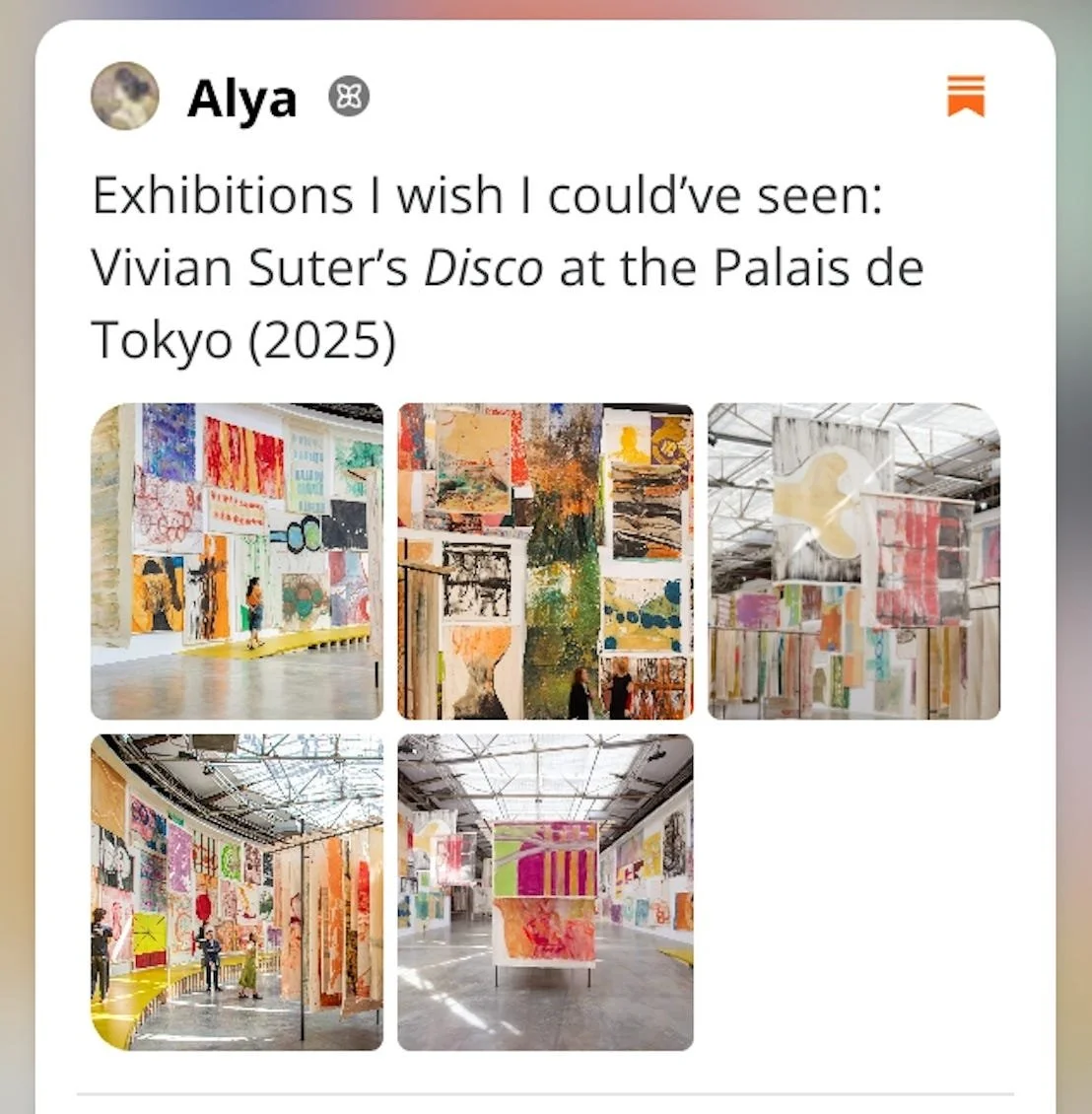
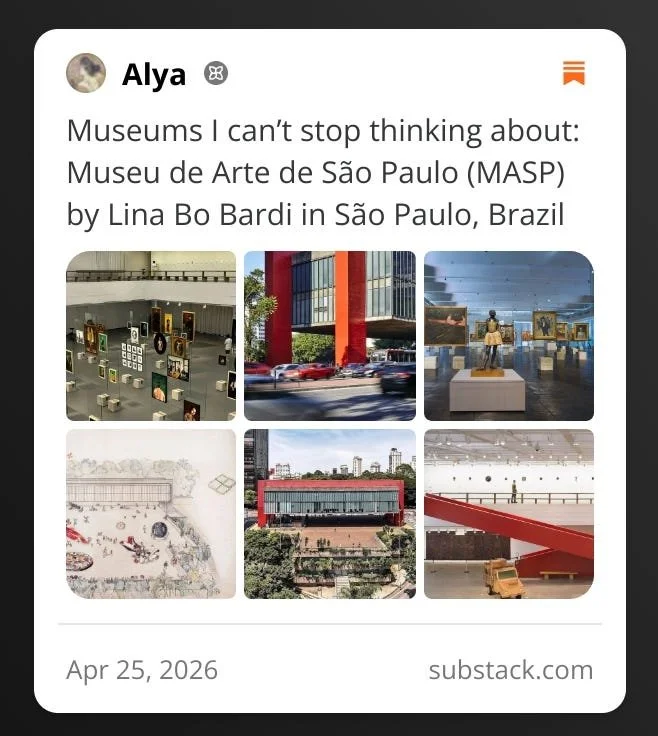
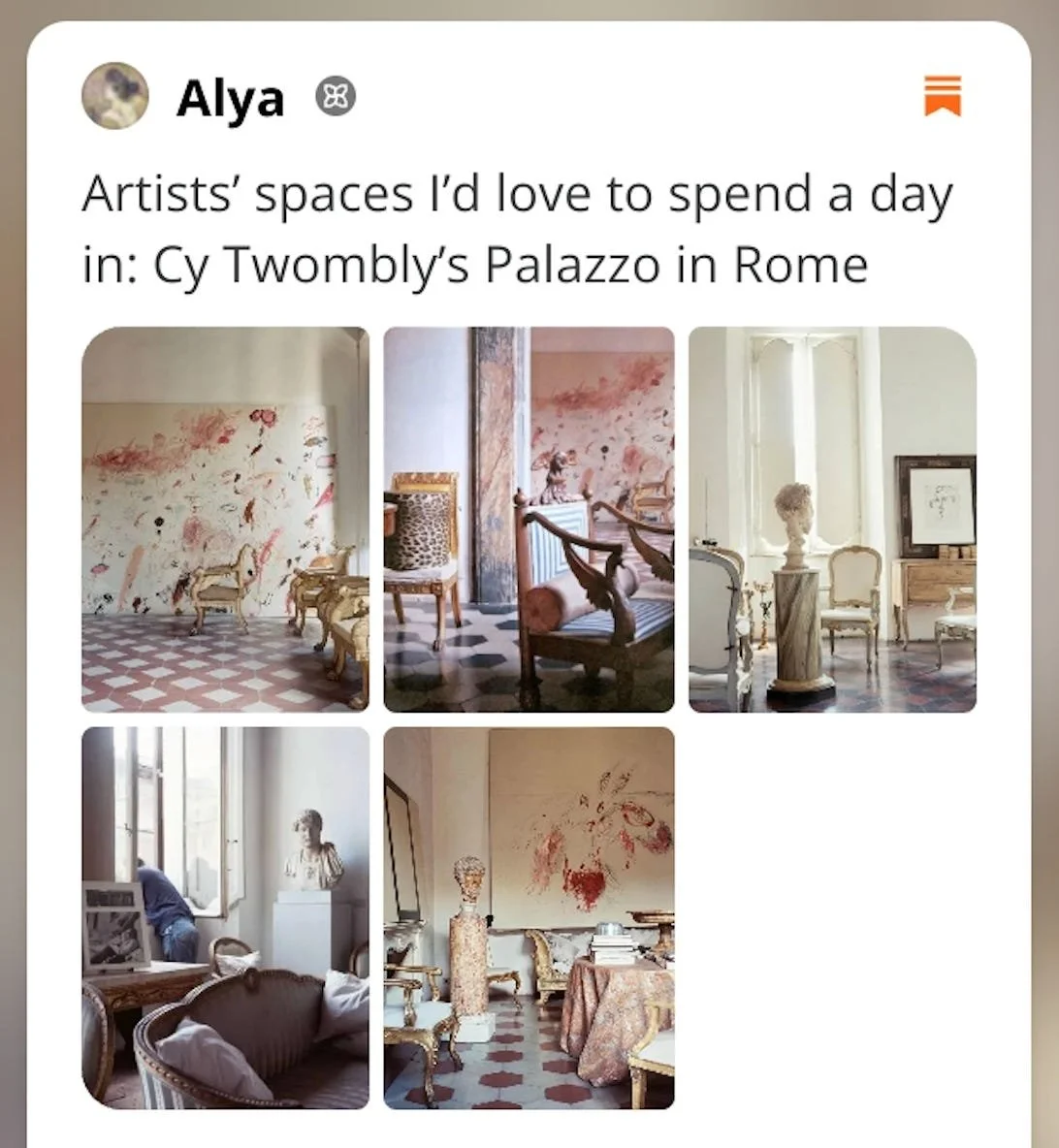
Alya is an Exhibition Designer at the Guggenheim Museum in NYC, and she’s taking us behind the scenes of what her job entails. Quick to point out that she’s not a curator, I’ll let her describe her role succinctly: “Where curators decide what the world sees, exhibition designers decide how the world sees it.” I was immediately transfixed by the premise for Alya’s new Substack because, honestly, I’d never spent much time focusing on the variety of decisions that are made before a visitor ever steps foot in an exhibition. Few things intrigue me more than discovering the deeper psychology and philosophy going on behind the scenes of something — especially something as seemingly straightforward as walking through a museum space. (Yes, architects, I see you, and now I hear you.) Alya’s only a few articles in so far, but I’m curious to see how it unfolds. I recommend starting with this article as a good primer. Once you’re absorbed into Alya’s world, you’ll never look at a pedestal the same again. Bonus: Alya's Notes feed on Substack is also perfect for a 5-second daydream, as seen in the examples above.
2. This Is Why I Find Pema Chödrön So Essential | The Ezra Klein Show
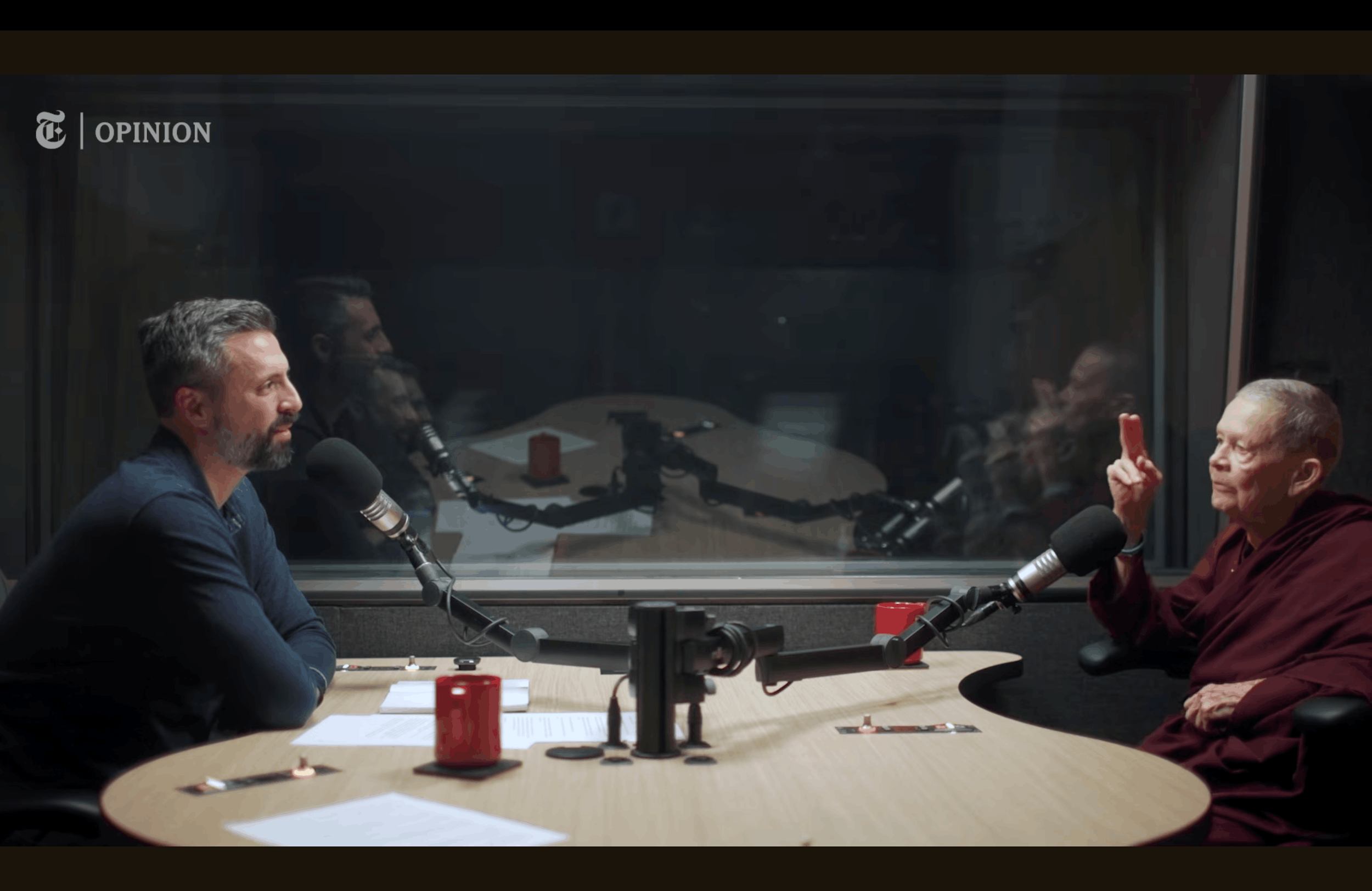
You can watch, listen to, or read the interview.
Ezra Klein is an Opinions Columnist and Podcaster for the New York Times and his wide-ranging, yet always topical, discussions rarely fail to make me better informed, or inspire me to think more deeply about something. Pema Chödrön is a Buddhist nun and author, and her recent episode ticked so many boxes for me. For years I’ve been curious about the Buddhist concept of impermanency as it relates to emotions, mental states, and the broader nature of life in general. Linked closely to impermanency is the concept of allowing and accepting — essentially ways of navigating life with less resistance. At a time when we’re living with so much catastrophe in the world, and varying degrees of uncertainty in our day-to-day lives, the desire to change or avoid situations can feel suffocating. This episode reminded me of the power of sitting comfortably with discomfort, rather than fighting it, and I walked away feeling refreshed and optimistic. If you’re not a podcast/YouTube person, you can read an edited transcript of the episode here.
3. Equator | A magazine of politics, culture and art
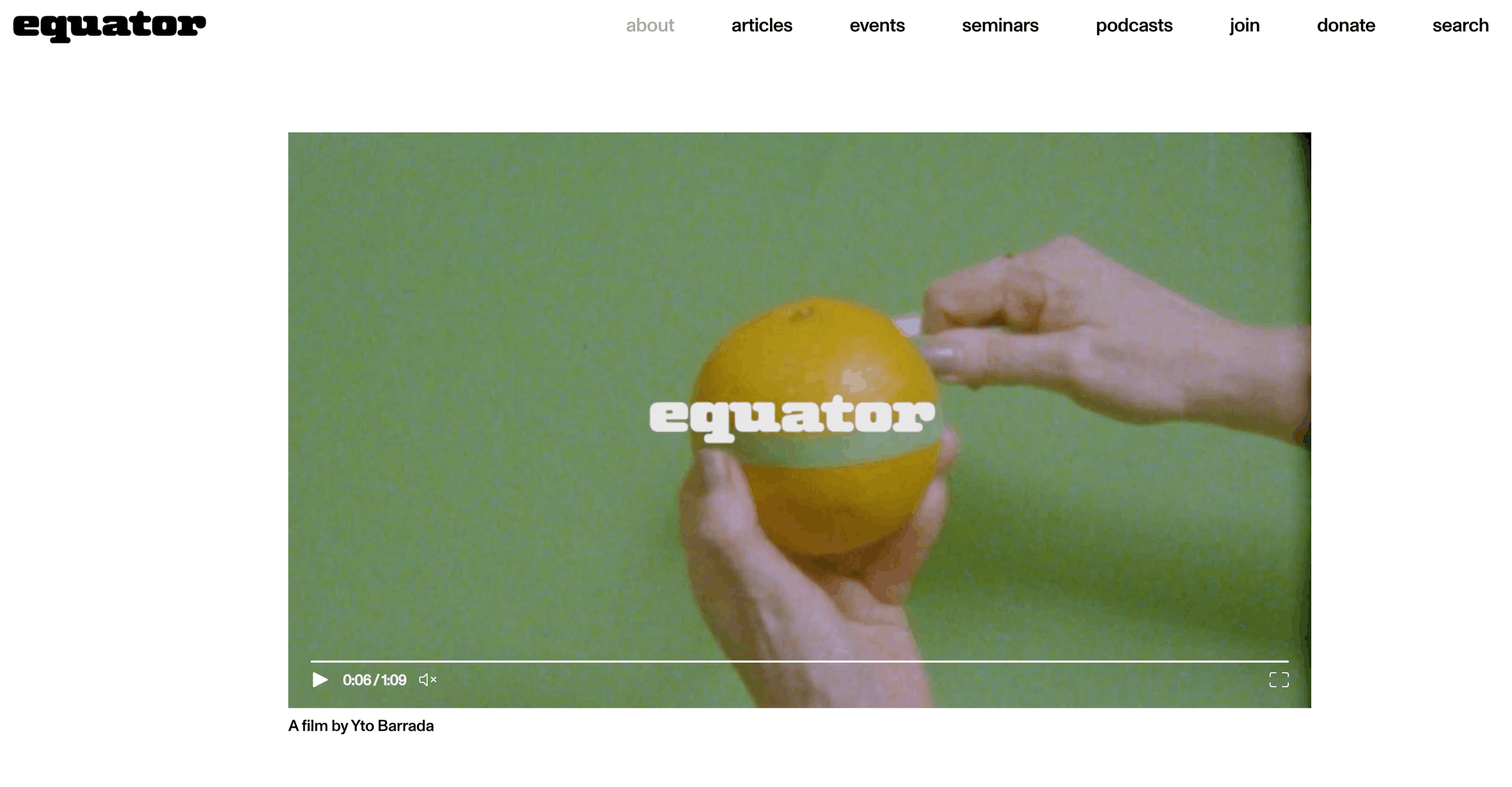
The last couple of years there’s been an influx of independent news platforms launching. I, for one, welcome this expansion, but it has also meant a lot of trial and error to find which outlets resonate, which have lasting power, and which are better left alone — it’s not you, it’s me. One platform that launched last year, Equator, caught my attention early on. It was founded by a group of journalists and editors who worked with well-known institutions like The Guardian and the NYT, and who became disillusioned after witnessing, what they say, was “their [mainstream news outlets] accelerating moral and intellectual decline firsthand.” Equator’s aim is to challenge the traditional narratives peddled by legacy media about non-Western countries, and so far I’ve found their work insightful and thought-provoking. Lina Mounzer wrote this piece early on that I highly recommend. Her insider knowledge about how difficult it is for writers from non-Western countries to be seen by Western news outlets as anything other than disaster correspondents is eye-opening. (NB: I don’t love that Equator doesn’t currently pay writers for articles. I feel very strongly that work should be paid for in this context; but I’m willing to give them a grace period in the hopes that they will update their policy once they’re up and running more officially.)
4. EE72 | Edward Enninful’s pivot to Substack
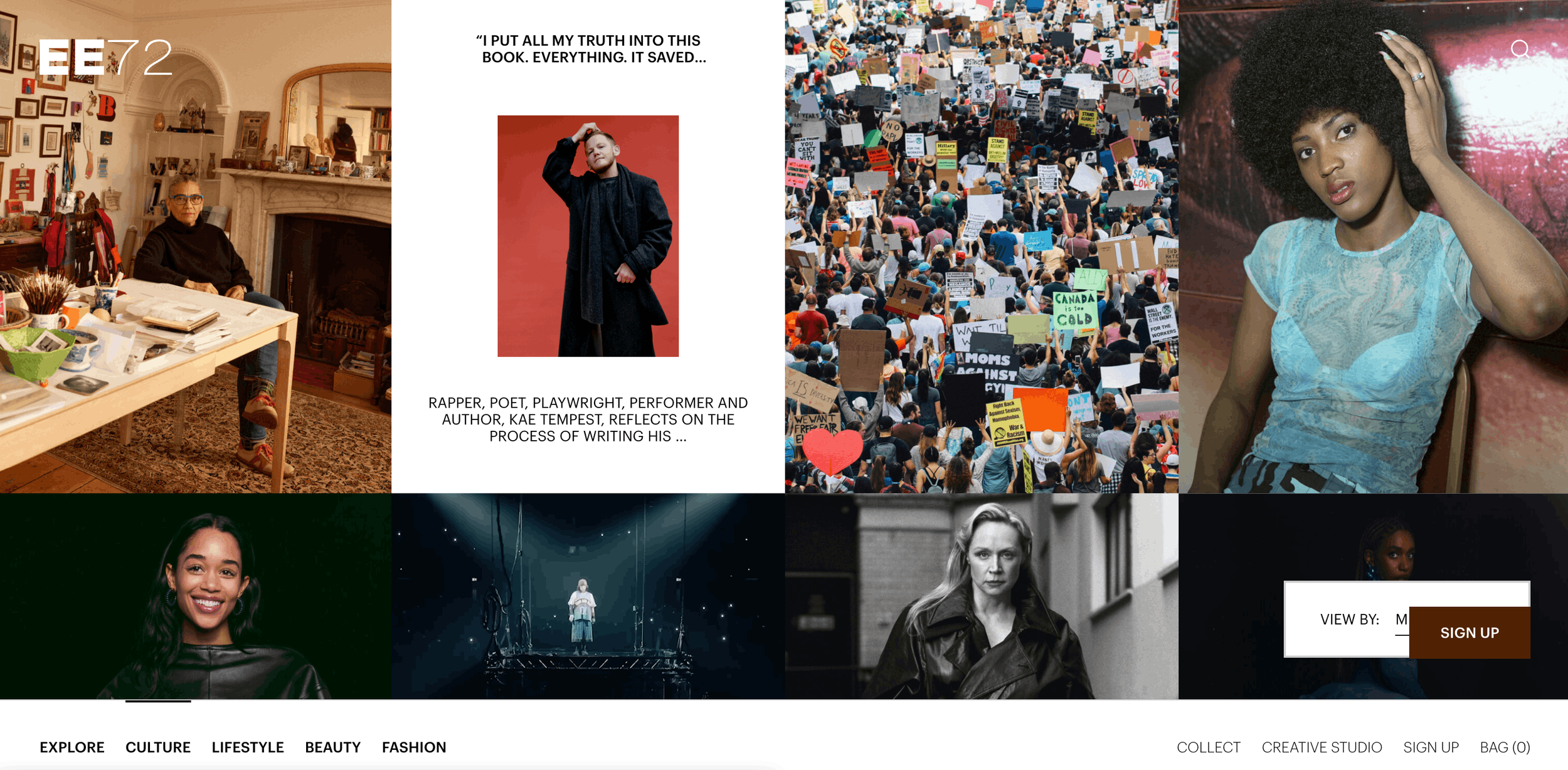
The desktop version of EE72’s website is so innovative, and makes you want to go back again and again to discover more.
Sticking with the theme of new media…
If last year was the year that everyone started a podcast, then this is shaping up to be the year everyone is starting a Substack (or leaving Substack, in my case 👋🏼). The latest to join the platform is Edward Enninful, the former editor-in-chief of British Vogue. He launched his own media company last year, EE72, with his sister, Akua. They print a quarterly magazine called 72 which is not only stunningly beautiful, but also culturally intriguing as it casts its eye on the periphery of culture, while also remaining firmly entrenched in the it world of fashion and media. 72 feels to me like Vogue’s grown-up sibling who’s seen a bit of the world, and returned a more interesting and thoughtful person. For as long as I can remember, the business of fashion and fashion magazines has fascinated me, and I like the direction that the Enninfuls are heading in a post-Anna Wintour world. You can find Edward’s Substack here.